
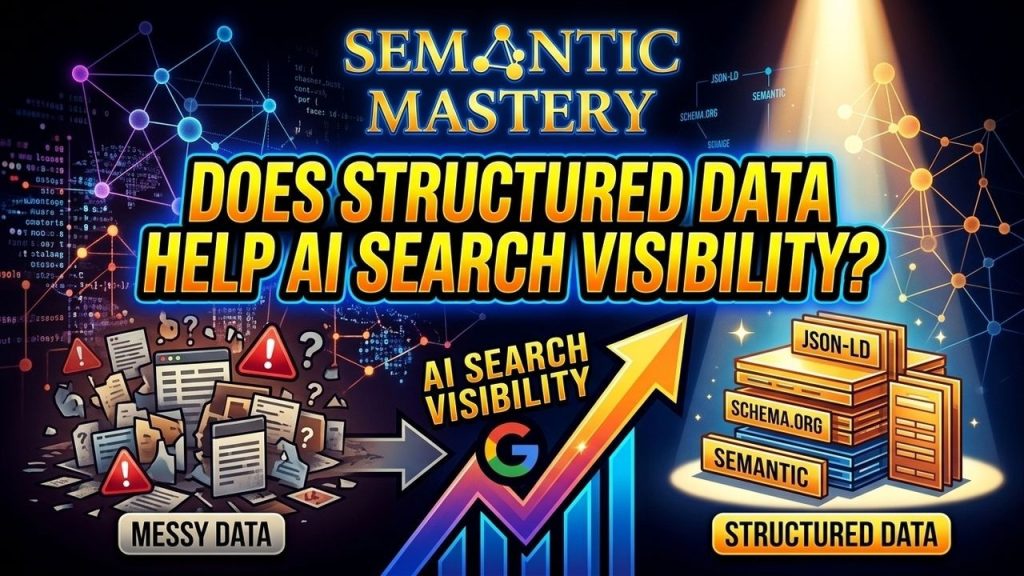
Structured data still matters, but we need to stop treating AI search and traditional search like they work the same way. They do not.
There is a common idea that on-page SEO no longer pays off because Google does not hand out rich snippets and enhanced results the same way it once did. That mixes together a few different topics: on-page SEO, schema markup, rich snippets, and AI search visibility.
They overlap, but they are not the same thing.
Table of Contents
On-Page SEO Is Not the Same as Rich Snippets
First, doing on-page SEO is still a good practice. A page should clearly explain what it is about, who it serves, where it serves, and why it matches a searcher's need. That includes clean page structure, useful headings, relevant copy, clear internal organization, and clean code.
Rich snippets are a separate result. They are enhanced search listings that can show extra details such as ratings, prices, FAQs, events, or other information.
Structured data, often called schema markup, was created to help search engines better identify the parts of a page. A web page is written for people. Schema gives search engines a machine-readable way to identify what certain pieces of information mean.
For example, local business schema can help define details such as:
- The business name
- The business type
- Its location or service area
- Links that confirm the business identity
- Products or services connected to the business
This can help a search engine interpret the page and may support enhanced search features. But it does not guarantee rich snippets. Google decides when and whether to show them.
Also, a page can sometimes generate a rich snippet even without schema markup. If the content is formatted well, the code is clean, and the page is easy to parse, search engines may still pull useful information from it.
So, when we say a page is “structured well,” we do not always mean it has schema. We may simply mean the page is well organized, properly formatted, and technically clean.
Search Engines Return Pages, AI Models Return Chunks
The biggest mistake is assuming language models read and use web pages the way search engines do.
Traditional search engines generally return pages. We enter a query, and Google provides a list of URLs it believes are relevant. Those pages may have rich results or other enhanced features, but the basic unit being returned is still the page.
AI models work differently. They can retrieve smaller sections of information from pages. Think of them as pulling relevant chunks instead of simply choosing an entire URL as the answer.
That difference changes how we should think about AI search visibility.
Search engines can use structured data as a clear signal about the contents of a page. Language models do not necessarily look at a block of schema and treat it as a special set of instructions in the same way.
Instead, they ingest content as tokens. Tokens are small pieces of text that the model processes. The normal page copy, headings, links, and schema markup can all become part of that text input.
This does not mean schema is useless for AI. It means the benefit is likely more indirect than many people claim.
Got SEO Questions? Get answers every week at 4pm ET at Hump Day Hangouts. Ask questions ahead of time, or live – just go to: https://semanticmastery.com/hdho (bookmark this!) 10+ years of insights given every week!
Get your checklist to help get better results with GBPs, faster.
Need DFY services for you Local SEO projects? Head over to Semantic Links.
Does Schema Directly Improve AI Search Visibility?
Our answer is: probably not in a direct, special way.
There are two camps on this. One side says structured data helps AI search. The other says it does not. The more useful view is in the middle.
Structured data may not receive special treatment from an AI model simply because it is schema. A language model is not necessarily looking at a large schema block and saying, “This is marked up data, so we should trust it more.”
But well-built schema can still support the page because it adds more relevant information. That is where entity density comes in.
An entity is a clear thing that can be identified, such as a business, service, city, product, or organization. When schema is properly built, it repeats and connects the right entities in a clear way.
For a local business, that might mean schema includes the business name, business category, nearby service cities, and trusted references that support the business identity. Those are all relevant data points.
Even if an AI model treats schema as more text tokens, those tokens can still reinforce what the page is about.
How Entity-Rich Schema Can Support Relevance
Think about schema as an added layer of clear context. It should match the page, not fight it.
If a local service page is about a certain service in a certain area, the page copy should make that clear. The headings should support it. The content should stay focused. Then the structured data can reinforce the same entities.
In local business schema, a few fields can help add that context:
- sameAs: Links to outside pages that help confirm accurate information about the business or location.
- areaServed: Cities, towns, or areas that fall within the real service area.
- Business type: The category that best describes the company and its services.
- Service details: Relevant offerings that match what the business actually provides.
When these fields are accurate and closely tied to the page topic, they add more relevant tokens. They also repeat the page's main ideas in a structured format.
That can help strengthen relevance analysis. Not because schema has some magic AI ranking switch, but because the page contains more connected, topic-focused signals.
For example, imagine a page about a local roofing company serving a specific city and nearby towns. A well-optimized page would naturally discuss roofing services, the company, and the places it serves. Its schema could reinforce those same details through business type, service area, and identity references.
The key is consistency. The structured data should support the content already on the page. It should not be stuffed with unrelated locations, services, or entities just to create more tokens.
Build Pages for Clarity, Not Schema Tricks
Schema is still worth using for traditional SEO. It helps search engines understand pages and can support rich results when Google chooses to show them. It can also add relevant entity signals that may help AI systems better interpret the subject of a page.
But we should not build schema based on the promise of direct AI search rankings. That claim goes too far.
A better approach is to build pages that are clear from top to bottom:
- Write content that clearly explains the product, service, location, or topic.
- Use headings and formatting that make the page easy to parse.
- Keep the code clean and the information organized.
- Add accurate structured data that matches the page.
- Use real entity references, including appropriate identity and location data.
- Avoid adding markup only for the sake of adding markup.
Good schema is not a replacement for good on-page SEO. It is an added layer that supports it.
For local SEO work, we can use the Local SEO Toolkit to help with prospecting, GBP optimization, link building, and other parts of building a stronger local presence.
The Practical Takeaway for AI Search
Structured data can help make a page more complete and more focused. It can increase the number of relevant entities and tokens connected to the page topic. That may improve how an AI system analyzes relevance.
Still, we should be precise about what that means.
Schema does not appear to have a direct, special influence on AI search visibility just because it is structured data. Its possible AI benefit comes from the relevant content it adds and reinforces.
That is why the best strategy remains simple: create clear pages, use proper on-page SEO, apply schema accurately, and make every part of the page agree on the same topic.
When the content, formatting, entities, and structured data all point in the same direction, we make it easier for both search engines and AI systems to see what the page is really about.
FAQ
Does structured data still help with SEO?
Yes. Structured data helps search engines identify key information on a page. It can support better interpretation and may make a page eligible for certain rich results, though Google does not guarantee those results.
Can a page get rich snippets without schema markup?
Yes. A well-formatted page with clean code and clear content can sometimes produce rich snippets without structured data. Schema can help, but it is not the only factor.
Do AI models use schema markup like Google does?
Not necessarily. Search engines can use schema as structured information about a page. AI language models process page content as tokens and may retrieve relevant chunks of information rather than simply returning a full page.
How can schema indirectly support AI search visibility?
Accurate schema can add relevant entities and topic-related tokens to a page. When it matches the page content, it can reinforce the business, service, location, and other key details that help support relevance.
Should we add more schema just to rank in AI search?
No. Add schema that is accurate, relevant, and supported by the page. Extra markup that does not match the content is not a smart strategy. Clear content and consistent entity signals should come first.