
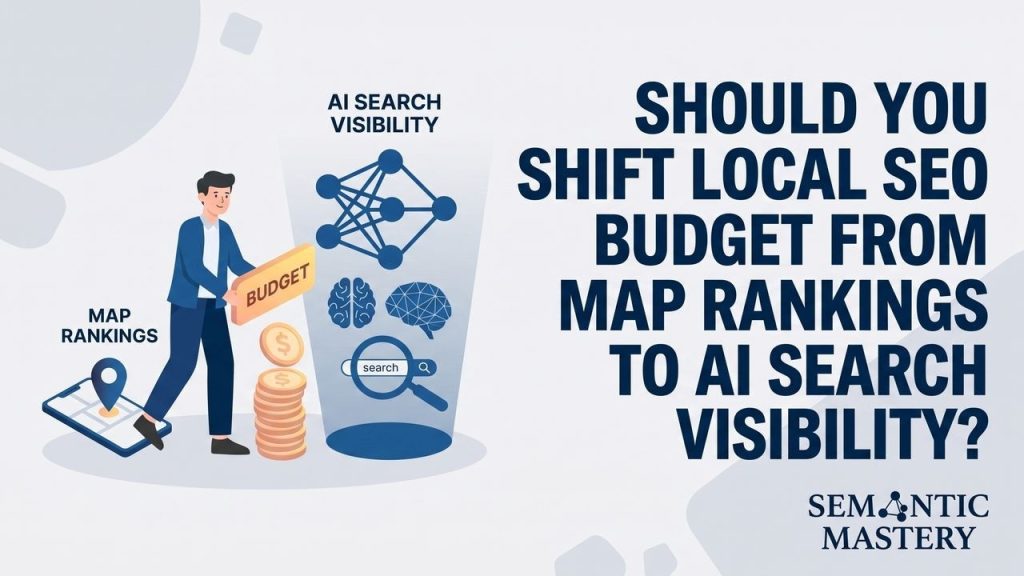
Getting a local business named in Gemini, ChatGPT, or Perplexity does not mean we should abandon Map Pack rankings. Much of the work that helps with local SEO also helps AI systems make sense of a business. The goal is still to connect the brand with what it does and where it does it.
We call this AI SEO. There is no fixed budget split that fits every business. Instead of treating maps and AI search as separate jobs, we should build a plan that supports both.
That plan has two sides: earn strong third-party brand mentions and publish first-party content that is factual, useful, and clearly our own.
Start With Third-Party Brand References
In our work, third-party references are the fastest route to better AI search visibility. These are mentions of a business on sites it does not own. In local SEO, we call them citations.
We often describe citations using NAPW:
- Name: The business name.
- Address: Its physical location.
- Phone: Its contact number.
- Website: Its web address.
A structured citation is a business listing with clear fields, such as a Yelp listing. It usually includes the name, address, and phone number, with or without a website.
An unstructured citation is a mention within other content. A local article that names a business and gives its website or address can count, too.
A citation does not need a clickable link to matter. The brand reference itself can help connect a company to a service, topic, or place. We still want relevant links, but we should not dismiss mentions that lack one.
Build Citations From Three Types of Sources
We focus on three groups: highly relevant sites, hyperlocal sites, and high-authority sites. Relevance should guide all three.
1. Highly Relevant Sources
These sites cover the business’s field. Think trade journals, industry publications, focused websites, and niche business directories.
Our Tree Care HQ directory is an example. It focuses on tree care providers, with related categories for landscaping and excavation because some tree contractors offer those services as well.
That clear topic focus helps connect a listed business to its work. We are not just collecting another mention. We are placing it in a setting that makes sense.
2. Hyperlocal Sources
These sources help connect the brand to its service area. They include:
- City, county, or regional chamber of commerce directories.
- Local news sites and newspapers.
- Community blogs and event sites.
- Local forums and business directories.
Even a local newspaper classified ad can act as a citation when it includes business details.
In our link work, we also look for old local domains with links from other sites in the same area. When we rebuild one, we keep its content in line with its past topic so those existing links still make sense. Here, the main connection is geographic.
3. High-Authority Sources
Broad business directories and news or media sites fit this group. Press releases are one tool we use more often now for both local clients and agency clients.
They can combine a brand mention, service details, location details, and fresh news. They are not cheap, but we have found them effective.
The point is not to publish empty announcements. A release should have a real news angle and a clear link to the business.
Got SEO Questions? Get answers every week at 4pm ET at Hump Day Hangouts. Ask questions ahead of time, or live – just go to: https://semanticmastery.com/hdho (bookmark this!) 10+ years of insights given every week!
Get your checklist to help get better results with GBPs, faster.
Need DFY services for you Local SEO projects? Head over to Semantic Links.
Choose Relevance Over a Big SEO Score
DA, DR, and Trust Flow are third-party metrics. They are not the goal of a citation campaign.
We care more about the connections a source helps us build. We can assess relevance at three levels:
- The page: Does the page containing the mention relate to the business?
- The site: Does the wider website cover related topics or the same area?
- The site’s links: Do relevant websites link to that source?
We use Majestic’s Topical Trust Flow categories to help sort links by topic. That is different from chasing a high score. The categories help us judge fit; the number alone does not.
Our job is to build clear ties between the brand, its services, and its location. Links and citations should serve that goal.
Give the Business’s Own Content a Reason to Be Cited
A first-party citation points to the business’s own website or a branded asset. A third-party citation draws from another publisher’s mention of that business. We should work on both.
For first-party content, the biggest change is simple: stop publishing generic articles.
AI makes it easy to produce pages that read well but sound like every other page on the topic. If we add no new insight, why should our page stand out?
We need details that belong to that business: its local experience, how it handles work, its service process, and its point of view.
We also assign authorship to a real company expert with verifiable experience or credentials. An agency may help write the piece, but the expert’s input should ground it.
Capture a Real Voice Before Writing
We separate brand voice from author voice. Brand voice sets the company’s tone and style. Author voice reflects how a real person explains things.
To build that author voice, we interview the client. We ask how they entered the trade, what they learned, and why they started their own business.
We then isolate the client’s words and use them to create a voice profile. It captures speech patterns, phrasing, and mannerisms that can guide future drafts.
This is not just about sounding casual. It helps us avoid content that could belong to any business in the same field.
Build a Content Pipeline Around Verified Facts
Our content pipeline runs in Cursor, though the same basic approach can work in other coding workspaces. It uses folders, clear rules, and reference files to guide one model through each stage.
Before we create a post, we prepare:
- A business fact file: Services, locations, history, licenses, credentials, and reviews.
- Customer profiles: The three to five most likely buyer types.
- A website crawl: Existing pages and internal link options.
- Topic research: Common questions and related searches.
- Voice profiles: Brand voice, author voice, or both.
- Service details: What the company offers and how it delivers the work.
That front-end work matters. We should not ask a model to invent proof or stretch claims. We need a digital paper trail for what we say.
The pipeline then moves through four writing stages: brief, draft, edit, and polish. We can pause for review at each step or let it run through the stages.
Our planning process can build a 13-week or 26-week calendar with three content slots per week. Those slots can support blog posts, social posts, and Google Business Profile posts. They do not all need to become full articles.
Use Real Images Without Adding More Busywork
We also built an image library process. It gathers company photos from Instagram, Facebook, and Google Business Profile when we do not have a client-supplied folder.
A person reviews the images first. Approved photos are then sorted into topic groups with Gemini, using tags that match the content plan.
Our publishing team can choose images with the right tag instead of searching through a pile of files. At the stage described here, image uploads still need manual work, while the draft and internal links can move into the publishing platform.
Shift the Work, Not Just the Budget Label
We do not need to drop local SEO to pursue AI search. We need better evidence about the business across the web.
Third-party mentions give us a faster path to broader brand visibility. Factual, distinct first-party content gives the business’s own assets a better chance to be cited. Together, they support the same clear message: who we are, what we do, and where we do it.