
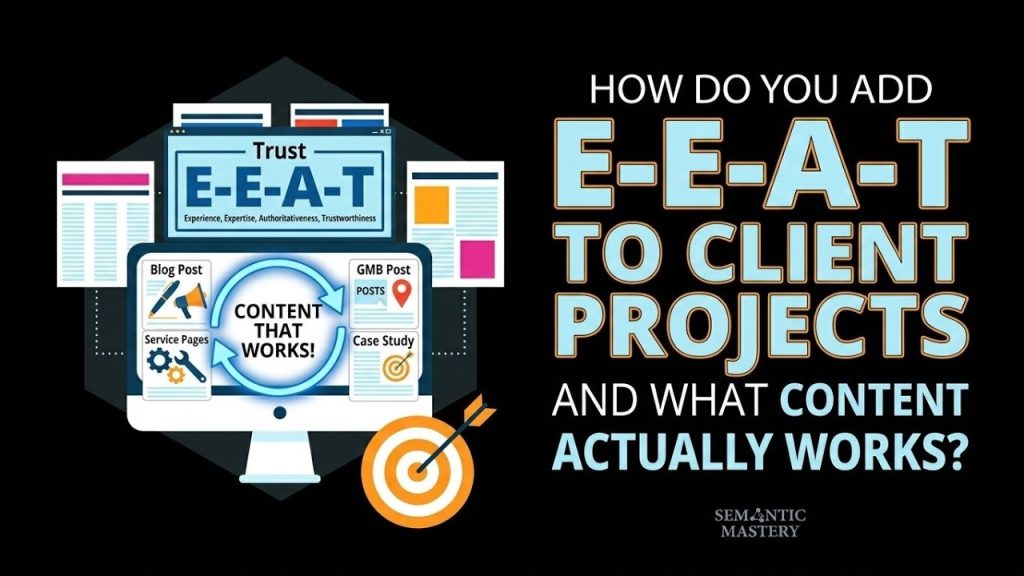
E-E-A-T matters more when content is easy to make. AI can help us write fast, but speed alone does not make content rank. If a page says the same thing as every other page on the web, just with different wording, there is no strong reason for Google to push it higher.
That is the big shift many people are running into now. Thin content, recycled ideas, and generic AI pages are easier to spot. What performs better is content with real experience, clear expertise, and proof that an actual person stands behind it.
We should also add one more idea to E-E-A-T: authenticity. That is often the missing piece. When we combine AI with real business stories, real authors, and real job details, content gets much harder to copy.
Table of Contents
Why generic AI content falls flat
AI can produce factually correct content very quickly. That is not the problem. The problem starts when the content adds nothing new.
If the top search results already cover a topic well, and our page only repeats those same points in fresh wording, then we have not helped the searcher much. We have not added depth, a fresh angle, or a real-world point of view.
That is why so much AI content underperforms. It may be clean and well written, but it often feels empty. It lacks:
- First-hand knowledge
- Real examples from the field
- A unique voice
- Proof that a real expert is behind it
- Original stories that competitors cannot duplicate
So the goal is not to stop using AI. The goal is to stop using AI in a lazy way. We want AI to help us package real expertise, not replace it.
Start with authorship
One of the easiest ways to strengthen E-E-A-T on client projects is to assign content to a real person inside the business.
A lot of agencies publish content under a generic company name, a fake writer profile, or some random website username. That misses a huge chance to add trust.
Instead, connect the content to a subject matter expert.
That person does not need to be famous. They do not need a degree. They do not need to be the top expert in the country.
They just need to be a real, believable expert for the topic at hand.
For a local contractor, that could be:
- The owner
- A founder
- A licensed pro
- A long-time technician
- An executive with direct field experience
Take a tree service company as an example. A business owner who has spent 15 or 20 years doing residential tree work is clearly a subject matter expert in that service. They may not be a public figure, but they know the work. That counts.
When content is tied to that person with a real author profile, it often performs better. Even when an agency writes the draft, the content gains a layer of trust because it is linked to someone with real experience in the company.
Got SEO Questions? Get answers every week at 4pm ET at Hump Day Hangouts. Ask questions ahead of time, or live – just go to: https://semanticmastery.com/hdho (bookmark this!) 10+ years of insights given every week!
Get your checklist to help get better results with GBPs, faster.
Need DFY services for you Local SEO projects? Head over to Semantic Links.
Authenticity is what makes content hard to copy
Authorship helps, but authenticity is what really separates strong content from plain content.
The best material often comes from the day-to-day stories inside the business. Not polished brand slogans. Not canned service blurbs. Real things that happened on real jobs.
That might include:
- A strange problem that came up on-site
- A funny customer moment
- A project that had an emotional backstory
- An unusual fix the crew had to figure out
- A lesson learned after years in the field
This kind of content is powerful because nobody else has that same story. Competitors can copy service pages. They cannot copy your client’s own experiences.
How we pull better content out of local business owners
Many business owners freeze up when they think they need to “create content.” They become stiff, formal, and awkward. That usually leads to bland copy.
The better move is to get them into conversation mode.
We can do that by asking simple, personal business questions, such as:
- How did you get into this line of work?
- When did you decide to start your own company?
- What problems did you face early on?
- What helped you push through?
- Can you share a memorable job story?
Then we stop talking and let them speak.
That is where the good stuff comes from. Business owners usually know their craft inside and out, and once they relax, they speak naturally. Their stories reveal their tone, their values, their know-how, and the details that generic content never captures.
This process also gives us language patterns we can reuse. We can build a tone and style guide from those conversations so future content sounds more like the client and less like a template.
Turn one story into many content assets
One strong story can do a lot of work.
Say a contractor shares a short story about a difficult project, a customer emergency, or a job with a surprising outcome. That one piece of source material can become a full marketing campaign.
From a single story, we can create:
- A blog post
- A project recap page
- Social media posts
- Short videos
- Service page callouts
- Quoted blocks from the owner
- Email content
This is where AI shines. Once we have real source material, AI can help us shape it into many formats quickly. But the raw material still comes from human experience.
Build a project section on the website
A simple way to publish authentic content is to create a project section on the site. This could be called completed projects, past projects, or something similar.
Think of it like a blog focused on real jobs.
Each post can describe:
- What the job was
- What made it different
- What challenge came up
- How the team handled it
- Why the result mattered
These pages are useful because they add original content to the site without fighting with the core service pages. They support the whole site by showing real-world experience.
They also create a steady stream of proof. Over time, that adds up.
Use quick voice notes from the field
Many local businesses do not have time to sit down and write. That is fine. They do not need to.
One of the easiest systems is to ask the owner or crew leader to record a quick voice note after a job whenever something unusual happens.
It does not even need to be video. Audio alone is enough.
They can simply explain:
- What happened
- Why the job stood out
- What the customer needed
- How they solved the problem
That short recording can feed a 7-day or even 14-day multi-channel campaign. It can also become a website post in the project section and provide direct quotes for service pages.
That is far more useful than asking someone to “make content” from scratch.
Use AI to organize and reuse the right data
Once we collect stories, voice notes, and interviews, we should not let them sit in a folder and gather dust. We want a system that stores them and makes them easy to reuse.
That can work like a second brain for the client.
Each audio file, video, and transcript gets saved in a searchable memory layer. Then, when we create new content, AI can pull from that material to enrich the draft with:
- The client’s voice
- Past job details
- Real phrases the owner used
- Stories tied to actual work
- Authentic quotes for supporting proof
This makes content much stronger. It sounds more human because it is built from human source data. It is still efficient, but it no longer feels empty.
If you want more systems and tools for this kind of work, the Local SEO Toolkit is a good place to start.
What content actually works for E-E-A-T?
If we boil it down, the content that works best is content that shows real-world experience and clear ownership.
That usually includes:
- Author-led service pages with a real expert attached
- Project stories from completed jobs
- Customer situation breakdowns that explain how problems were solved
- Voice-note based updates from the field
- Quotes from business owners or team members woven into key pages
- Content written in the client’s actual tone instead of generic brand language
The pattern is simple. The more a page sounds like it could only come from that business, the better.
The real takeaway
We do not need to choose between AI and human expertise. The smart move is to combine them.
Use AI for speed, structure, repurposing, and scale. Use people for stories, insight, judgment, and lived experience.
That is how we add E-E-A-T to client projects in a way that actually matters. Assign real authors. Capture real job stories. Store that information. Reuse it across the site and other channels. Then let AI help shape and spread it.
When content carries real experience, it becomes harder to copy and more useful over time. That is the kind of content that keeps working.
FAQ
Does the author need to be a famous expert?
No. A business owner, technician, or licensed pro can be enough if they have real experience in that field and can be tied to the company in a believable way.
Can AI-written content still rank well?
Yes, but it works better when it is built from real human input. AI content that only rewrites common ideas tends to be weak. AI content that uses real stories, quotes, and expert input is much stronger.
What is the easiest way to collect authentic content from clients?
Ask for short voice notes after unusual jobs. A quick audio recap can give us enough material for web content, social posts, and follow-up marketing.
What kind of website section should hold project stories?
A project, completed jobs, or past projects section works well. It acts like a blog built around real field experience and supports the site with original content.
How can we keep using client stories over time?
Store interviews, audio notes, and transcripts in a central system or memory layer. That lets AI pull from them later when drafting new pages, posts, quotes, and campaigns.