
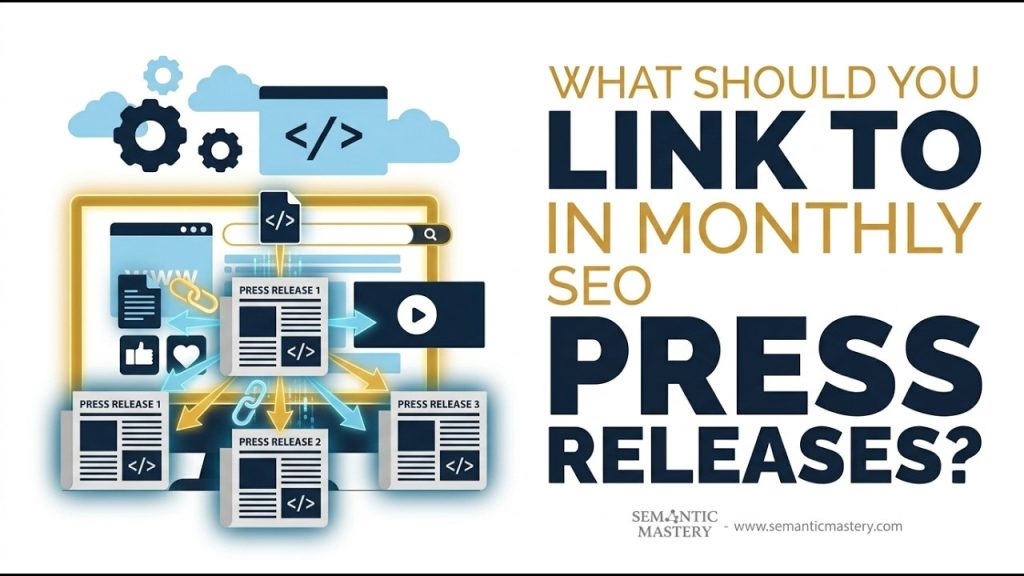
Monthly SEO press releases can help local businesses, but only if we use them the right way. A lot of people treat press releases like a backlink trick. They send link after link to the main website and hope rankings go up. That is usually the wrong play.
The real power of press releases is not the link itself. It is the brand mention, the citation, and the connection between the business, its services, and the places it serves. When we keep that in mind, the whole strategy gets a lot smarter.
Table of Contents
Why direct website links lose power over time
If we publish a press release every month and keep linking straight to the same site from the same group of press release domains, the effect gets weaker. Search engines are not impressed by the fourth, fifth, or tenth version of the same thing.
That is why using press releases mainly for link building is a mistake. Repeated links from the same referring domains bring less and less impact. Over time, they can become background noise.
So if the goal is long term local SEO growth, we need to stop thinking only about raw backlinks. We should think about:
- Brand mentions
- Entity associations
- Service relevance
- Location relevance
- Supportive branded assets
That is what gives press releases staying power.
What to link to instead of always linking to your website
If we should not keep pointing every press release at the money site, what should we link to? We have plenty of better options.
The idea is to spread those links across assets that support the brand. That helps build a wider footprint and stronger trust signals around the business.
Strong link targets for monthly press releases
- Google Maps share URL for the business profile
- Google review share URL
- Knowledge panel share URL
- ID page
- Social media profiles
- Branded web 2.0 properties
- LinkedIn profile of the founder or executive mentioned in the release
- BatchGeo maps or cloud pages
- Media room page from the press release service
- Other branded or supporting assets already built for the business
That last point matters a lot. If a person is quoted in the press release, do not just link to the company. If that person has a strong LinkedIn profile, use it. That adds another layer of identity and trust around the brand.
And no, we do not need to cram a press release full of links. One clean link to a relevant supporting asset is often enough. We do not need to force three or five links into every release.
Got SEO Questions? Get answers every week at 4pm ET at Hump Day Hangouts. Ask questions ahead of time, or live – just go to: https://semanticmastery.com/hdho (bookmark this!) 10+ years of insights given every week!
Get your checklist to help get better results with GBPs, faster.
Need DFY services for you Local SEO projects? Head over to Semantic Links.
Use the right Google business assets
With local SEO press releases, some of the best targets are Google business assets. These are often overlooked, but they fit the goal much better than hammering the main site over and over.
Here are the main ones to use:
- Maps share URL from the Google Business Profile
- Review share URL from the reviews section
- Knowledge panel share URL from a branded Google search
These links help reinforce the connection between the business name and its Google presence. That is a smart move for Google Business SEO and local entity building.
If we are also working through a full GBP process, it can help to keep supporting assets organized and aligned with the business profile. For businesses focused on local search, the GMB process checklist can help map out that work.
How press release silos and stacks work
There is another way to get more out of press releases without overdoing direct links. That is where press release silos or press release stacks come in.
This approach works like a topic cluster.
Instead of sending every release to the target page on the website, we build a structure:
- Create one top level press release, often a premium release.
- That top release links to the money page using a branded anchor.
- Publish more releases around related subtopics, longer phrase searches, or common questions.
- Link those supporting releases to the top level release instead of the website.
That setup pushes relevance through the stack to the main release, and then to the target page. It is a cleaner and stronger way to guide authority and topical signals.
Example of a simple silo
Let’s say the target page is about roof repair in a certain city.
The top press release could focus on the main topic and location, such as roof repair in that city. Then the next releases could cover supporting topics like:
- Signs a roof needs repair
- How storm damage affects roofs in that area
- Common roof repair questions
- Differences between repair and replacement
Each supporting release links back to the top release. The top release links to the main service page. That creates a clear path for topical relevance.
Now we are not blasting the same website page every month from the same domains. We are building a structured cluster around the brand, the service, and the location.
What press releases are really doing for local SEO
When used well, press releases help search engines connect the dots. They help establish:
- The name of the business
- The products or services it offers
- The locations or service areas tied to that business
That is the real win.
Every release becomes a branded document that supports those associations. The wording of the release, the citation details, the entities mentioned, and the linked assets all work together. This is why brand authority matters more than chasing one more backlink metric.
Used this way, press releases help us build relevance in a way that makes sense over time.
A smarter monthly press release strategy
If we are publishing monthly press releases, a simple plan looks like this:
- Choose a main topic tied to a service and location.
- Create a top release that targets that topic.
- Use a branded anchor from that release to the matching page on the website.
- In future releases, cover related subtopics and common questions.
- Link those later releases to branded assets or back to the top release.
- Rotate link targets so we are supporting the full brand footprint.
This keeps the campaign natural. It also lets us publish regularly without worrying that we are overusing the same direct website links.
If we want more local SEO training and tools around this kind of work, there is a free Local SEO toolkit with resources for prospecting, GBP optimization, and link building.
Common mistakes to avoid
- Using every press release mainly to build backlinks to the homepage
- Linking to the same target every month without variation
- Stuffing too many links into one release
- Ignoring branded assets like Maps, reviews, and social profiles
- Skipping entity support for the people quoted in the release
- Missing the chance to build topic clusters with press release stacks
The better move is to use press releases as part of a wider branded SEO system.
The takeaway
Press releases still work, but not in the way many people think. They are not best used as a simple link building tool. They work best when we use them to strengthen brand mentions, local associations, and topical relevance.
So instead of asking, “How many links can we squeeze into this release?” we should ask, “What brand asset or supporting page makes the most sense here?”
That shift changes everything.
When we spread links across branded properties, build press release silos, and keep reinforcing the connection between the brand, the services, and the service area, we get a much stronger long term SEO result.
FAQ
Should we ever link directly to the website from a press release?
Yes, but not every time. A good method is to have one top level press release link to the target page on the website with a branded anchor. Then let later releases support that top release or other branded assets.
What is the best link target for a monthly local SEO press release?
There is not one single best target. Good options include the Google Maps share URL, review share URL, knowledge panel share URL, ID page, social media profiles, branded web 2.0s, and LinkedIn profiles tied to the business.
How many links should a press release include?
Usually fewer is better. One relevant link is often enough. There is no need to overload a release with multiple links just to hit a number.
What is a press release silo?
A press release silo is a group of related releases built around one topic. The top release links to the website page, and the supporting releases link to that top release. This pushes topical relevance through the stack.
Why do repeated press release links lose impact?
Because repeated links from the same referring domains tend to show less effect over time. Search engines get less from the same pattern repeated again and again, which is why brand mentions and entity associations matter more.
See the tools and resources used for agency and local SEO work if you want to build a more complete system around branded assets and entity support.