
Yes, AI content can rank on Google. The bigger question is not whether AI wrote the first draft. The real question is this: who stands behind the content, and does it add something useful?
That is where a lot of people get this wrong.
There is a ton of bad advice floating around about AI content. Some people act like Google will punish anything touched by AI. Others think they can mass-produce bland articles, slap them on a site, and expect traffic to roll in. Neither view is very helpful.
If we want AI content to perform, we need two things working together:
- Real insight that helps people
- Clear authorship tied to a real subject matter expert
Table of Contents
AI content is fine, but generic content is the problem
AI is just a tool. It can help draft content faster. It can help organize ideas. It can help turn rough notes into clean copy. None of that is the issue.
The problem starts when agencies or businesses publish content just to keep a blog active. That usually leads to safe, bland articles that say the same thing as the top ten pages already ranking.
If a page does not bring anything new to the table, why would Google push it higher?
That is the part many people miss. Google is getting better at spotting content that is repetitive, thin, or empty. It may not always feel like a penalty. It is often more like the page simply does not get a boost. It gets ignored.
So if we use AI to create content, we cannot stop at the draft. We have to improve it, shape it, and connect it to a real expert.
Why subject matter experts matter so much
Authorship is a big deal because it creates accountability.
When a real person is attached to a piece of content, there is someone taking ownership of the ideas. That matters more than publishing under a brand name alone.
For local SEO, this is pretty straightforward.
Take a plumbing company. The business owner may not be famous in the plumbing world, and that is fine. They do not need to be a public figure. If they are licensed and qualified, that already makes them a subject matter expert in their field.
The same goes for many local businesses:
- A master plumber is qualified to speak on plumbing topics
- A certified arborist is qualified to speak on tree care
- A contractor with the right license is qualified to speak on their trade
They do not need celebrity status. They need real-world credentials.
That is the kind of expertise we should connect to AI-assisted content.
Got SEO Questions? Get answers every week at 4pm ET at Hump Day Hangouts. Ask questions ahead of time, or live – just go to: https://semanticmastery.com/hdho (bookmark this!) 10+ years of insights given every week!
Get your checklist to help get better results with GBPs, faster.
Need DFY services for you Local SEO projects? Head over to Semantic Links.
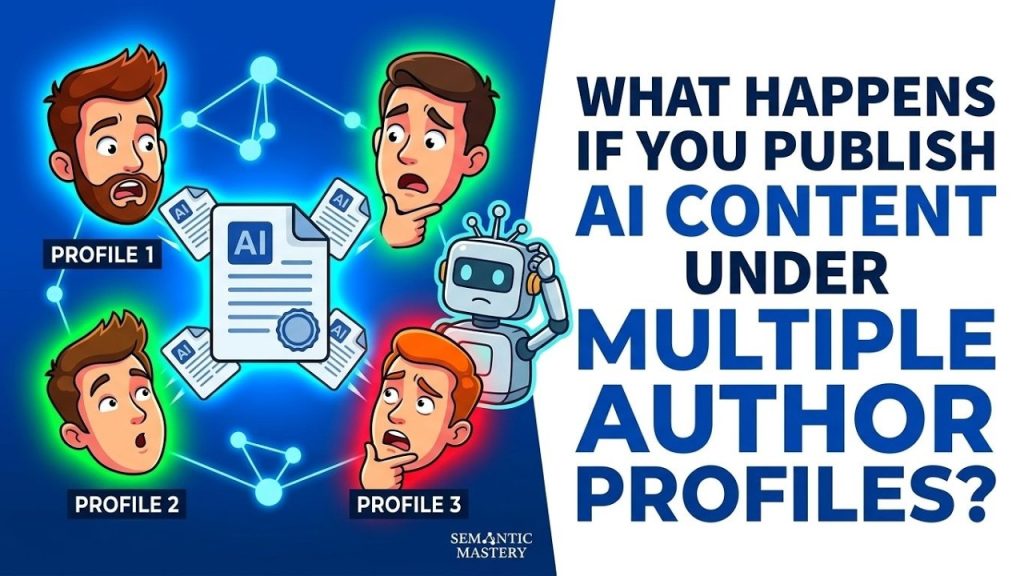
Should you use multiple author profiles?
Yes, multiple author profiles can be fine, but only if those profiles are real, relevant, and believable.
If we create a group of authors just to make content look more human, that is weak. If the profiles are fake, vague, or have no proof of expertise, they are not helping much.
But if there are multiple real people in the company who truly know the topic, then using more than one author can make sense.
For example, a local business might publish content under:
- The founder
- The licensed lead technician
- A certified specialist on the team
- A trained spokesperson with proven experience
The key is that each author should be tied to topics they are actually qualified to speak about.
So the answer is not just, “Can we use multiple authors?” The better question is, “Are these authors real subject matter experts with clear proof behind them?”
What makes an author profile credible?
If we want authorship to help content perform better, the author should be verifiable.
That means there should be signs that this person is real and qualified. Depending on the business, that can include:
- Professional licenses or certifications
- A role at the company that fits the topic
- A visible bio page
- Some online presence, such as social media profiles
- Industry background or hands-on experience
This does not need to be fancy. It just needs to make sense.
If we publish an article about tree disease under the name of a certified arborist, that feels natural. If we publish it under a random brand profile with no person attached, it feels flat. If we publish it under a made-up writer with no background, it feels even worse.
Clear authorship sends a simple message: a real person is standing behind this information.
Why many agencies hurt rankings without meaning to
This is where things go sideways for a lot of SEO agencies.
Blogging is a repeatable service. It is easy to package, easy to bill for, and easy to scale. That is why so many agencies offer monthly blog posts to clients.
But when the content is generic, the agency may be making money while the client’s site gets weaker.
That happens when posts are published just to fill a content calendar, not to add fresh ideas or useful detail. If article after article says nothing new, the site starts collecting pages that do not really help.
That can drag down overall performance.
So we need to be careful. More content does not always mean better SEO. Better content means better SEO.
What changed with the March 2026 core update
One of the biggest takeaways from the March 2026 core algorithm update was how much weak content lost ground.
This update was highly volatile, and it made one thing clearer: pages that do not offer helpful, distinct insight are less likely to get promoted.
Again, that does not always mean a page was actively punished. In many cases, it simply stopped getting visibility because other pages were more useful, more original, or more trustworthy.
That lines up with what many of us have been seeing for months. Content performs better when:
- It has a clear point of view
- It adds something not already repeated everywhere else
- It is tied to a real expert
- It feels accountable, not anonymous
That is why authorship matters so much right now.
Best practices for AI content and authorship
If we are publishing AI-assisted content for local SEO or business websites, here is the safer path.
- Use AI for drafting, not for final truth. Let it help with structure and speed, but review everything.
- Make sure the content is accurate. Check facts, details, and claims before publishing.
- Add fresh insight. Include experience, examples, or explanations that go beyond the usual recycled advice.
- Assign the content to a real person. Pick someone at the company who is qualified to speak on that topic.
- Match the topic to the author. Do not use one random profile for everything.
- Build out author credibility. Add bios, credentials, and signs that the person is real.
- Avoid faceless brand-only publishing when possible. Person-based authorship tends to work better than generic brand authorship.
If we follow those steps, AI becomes a support tool instead of a shortcut that weakens the site.
So what should we do with multiple authors?
Use them if they are legitimate.
If a company has several real experts, that can be a strong setup. It shows depth. It shows different voices and specialties. It can even help cover more topics in a natural way.
Just do not confuse “multiple profiles” with “strong authorship.” Those are not the same thing.
Strong authorship means the profile points to a real expert with a real connection to the topic.
If we fake that part, Google is not likely to reward it. If we do it honestly and pair it with content that says something useful, we give the page a much better shot.
If you want more help with local SEO systems, check out the Local SEO Toolkit or review the GMB Process Checklist for practical steps.
Final thought
The future of AI content is not about hiding the tool. It is about pairing the tool with real expertise and real responsibility.
That is the standard we should be aiming for.
Publish content that teaches something useful. Put a qualified person behind it. Make it clear who owns the ideas. When we do that, AI content can work just fine.
FAQ
Can AI-written content rank on Google?
Yes. AI-written content can rank if it is accurate, helpful, and tied to a real subject matter expert. The problem is not AI itself. The problem is low-quality content that says nothing new.
Is it okay to publish AI content under multiple author profiles?
Yes, as long as the author profiles belong to real people with real expertise. Multiple authors can work well when each person is qualified for the topic they are covering.
Does every author need to be famous in the industry?
No. They do not need to be well known. They just need to be qualified. For local businesses, that often means the owner, founder, or licensed professional on staff.
Why is generic brand authorship weaker?
Generic brand authorship often lacks accountability. When a real person is attached to the content, it is easier to trust that someone with knowledge stands behind it.
Can blogging too much hurt a client site?
Yes, if the content is repetitive and low quality. Publishing lots of weak articles just to fill a schedule can hurt overall site performance instead of helping it.