
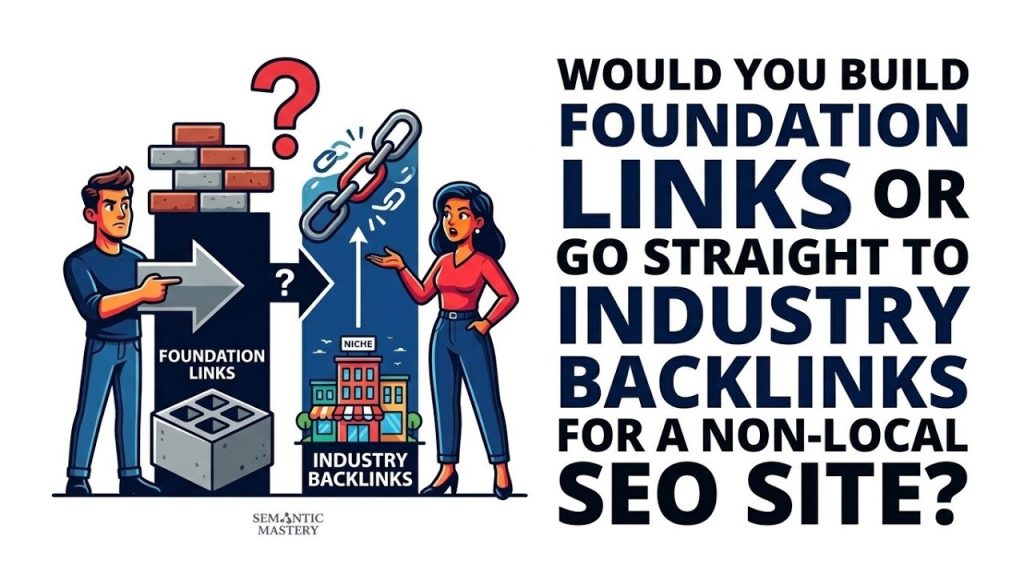
If we are building SEO for a non local business, the short answer is simple. We should do both.
That means building foundation links like citations and brand mentions, while also building industry relevant backlinks from sites that match the topic of the business.
A lot of people think citations only matter for businesses with a storefront or service area. That is not true. Even online businesses need brand signals. In fact, if we want stronger search visibility, better AI search references, and clearer brand authority, we should not skip them.
Table of Contents
Why non local SEO still needs foundation links
When people hear the word citation, they often think of a local business listing with a name, address, phone number, and website. That is only one kind of citation.
A citation is really just a published mention of a brand.
So even if a company does not serve a city or region, it can still build citations. That includes:
- Business directory profiles
- Mentions on blogs
- Press release mentions
- Profiles on web 2.0 sites
- References on industry websites
Some citations are structured, like directory listings. Some are unstructured, like a brand mention inside an article. Both help build trust and recognition around the business.
For a new site, this matters a lot. We want search engines to understand who the brand is, what it offers, and where it belongs in the market.
Brand authority matters more than ever
For local SEO, we often talk about branded location authority. For non local SEO, we remove the location piece and focus on brand authority.
The goal is still the same. We want search engines to understand:
- Who we are
- What we do
- What products or services we provide
If the business also has physical offices, then location can be added to that picture. But for a site that operates online, the brand itself is still the thing we need to strengthen.
This is a big reason why third party references work so well. Search engines are not only looking at what we say about ourselves on our own site. They also look at what trusted outside sources say about the brand.
That is especially important for AI search results. Many AI systems pull references from outside sources. They may cite the business website, but they also often rely on brand mentions from other websites. So if we want better AI search visibility, third party validation is a strong place to focus.
Got SEO Questions? Get answers every week at 4pm ET at Hump Day Hangouts. Ask questions ahead of time, or live – just go to: https://semanticmastery.com/hdho (bookmark this!) 10+ years of insights given every week!
Get your checklist to help get better results with GBPs, faster.
Need DFY services for you Local SEO projects? Head over to Semantic Links.
A non local business can still use a registered address
Many online businesses assume they cannot build traditional citations because they do not have a public storefront.
But if the business is registered as a company, it usually has a legal address tied to that registration. That could be through an LLC, a corporation, or a registered agent address.
That means we can often still create structured business listings on trusted directories.
Even if customers never visit that address, it still helps as a business identity signal. It confirms that the company is real and tied to an actual registration.
So for a non local site, we should not assume business directory citations are off the table. In many cases, they still make sense.
Do not choose between citations and relevant links
This is where many campaigns go wrong. People try to pick one lane.
They ask whether they should build foundational links first and wait on relevant backlinks, or skip the foundation and go right to niche links.
We should think bigger than that.
The strongest approach is to build both because they do different jobs:
- Foundation links help validate the brand across the web
- Relevant backlinks help connect the brand to the right topics and services
Together, they help search engines form better associations around the business.
Relevance beats old SEO metrics
One of the biggest mistakes in link building is getting stuck on numbers like DA, DR, Trust Flow, or similar scores.
Those metrics may be useful for rough comparisons, but they are not the real target.
The real target is relevance.
Our job in SEO is to help search engines connect the right ideas. We want the algorithms to understand that our brand is associated with certain services, products, topics, and in some cases locations.
That means the links we build should come from places that make sense.
For a non local campaign, geographic relevance may matter less. Topical relevance still matters a lot.
If we are promoting a site about SEO for dentists, we want links and mentions from sources that fit topics like:
- Dental marketing
- SEO
- Digital marketing
- Dental business growth
- Agency services
That kind of fit helps create stronger meaning around the brand than a random high metric link ever could.
Why branded anchor text works so well
When direct links point to a main website, branded anchors should make up most of the profile.
That means using the business name, brand name, or URL far more often than keyword stuffed anchor text.
Why? Because strong sites tend to have natural, brand heavy backlink profiles.
That pattern shows up again and again. Top ranking sites often lean heavily on branded or URL anchors. That is a strong clue that search engines reward brands, not just keyword tricks.
So when we build direct links, a smart rule is to keep the anchor text mostly branded. That supports brand authority and reduces the risk of creating an unnatural footprint.
How to create better entity associations
Good link building is not just about getting a link placed. It is about the context around that link.
Here is what we want:
- A branded anchor text link
- Placed inside content that talks about related topics
- Surrounded by words and entities tied to our services
- Published on a site that is relevant to our niche
That helps create a strong association between the brand and the things we want it known for.
For example, if the brand is linked inside content about dental SEO, local practice marketing, lead generation, and website optimization, that sends clear topic signals. If that article also lives on a site that regularly publishes marketing content, the association gets even stronger.
This is how we build semantic relevance. We are not trying to impress search engines with random authority numbers. We are helping them connect the dots.
What kinds of citations and mentions should we build?
For non local SEO sites, it helps to spread brand mentions across different types of trusted sources.
1. High authority general directories
Large business directories still help because they act as trust signals. Listings on well known platforms support brand validation and can confirm basic company information.
2. Press releases and media style mentions
Brand mentions on news style sites can be strong authority builders. They place the brand on established publishing platforms and create more third party references.
3. Industry specific websites
This is where relevance gets stronger. Trade sites, niche blogs, industry journals, and related publications help tie the brand to its market.
4. Supporting branded profiles
Profiles on web 2.0 sites and business platforms can help expand the branded footprint across the web.
If we want more help with this process, the Local SEO Toolkit includes resources for prospecting, link building, and optimization.
A simple plan for a new non local site
If we were launching a fresh non local SEO brand, here is a simple way to think about the campaign:
- Make sure the on page SEO is solid
- Set up organization based schema that clearly defines the business
- Build structured citations where the business can be listed
- Build unstructured citations through branded mentions
- Start getting backlinks from niche relevant sources
- Use branded anchors for most direct links
- Place those links inside content that includes closely related topics and entities
That gives us both a strong base and the right topical signals.
The big takeaway
For a non local site, the answer is not foundation links or industry backlinks.
It is foundation links and industry backlinks.
We still need citations because citations are brand mentions, and brand mentions help build authority. We still need relevant links because relevance creates the associations search engines use to understand the business.
If we stay focused on brand authority, relevance, and clear topic associations, we are doing the work that matters now.
That is a much smarter path than chasing outdated metrics.
FAQ
Can a non local business build citations?
Yes. Citations are not only for storefront businesses. A citation can be any published mention of the brand. If the business is legally registered, it can often also build structured directory listings.
Should we skip foundation links and only build niche backlinks?
No. Foundation links and niche backlinks do different jobs. Foundation links help validate the brand. Niche backlinks help build topical relevance. A good campaign uses both.
Do SEO metrics like DA and DR matter most?
No. They can be rough comparison tools, but they are not the main goal. Relevance and strong brand associations matter more than chasing metric scores.
What anchor text should we use for direct links to the main site?
Most direct links should use branded anchors or the URL. That helps build a natural backlink profile and supports brand authority.
Why do third party mentions help with AI search visibility?
AI search systems often rely on outside references to understand and cite brands. Strong mentions on trusted third party sites can improve how often a brand is recognized and referenced.